
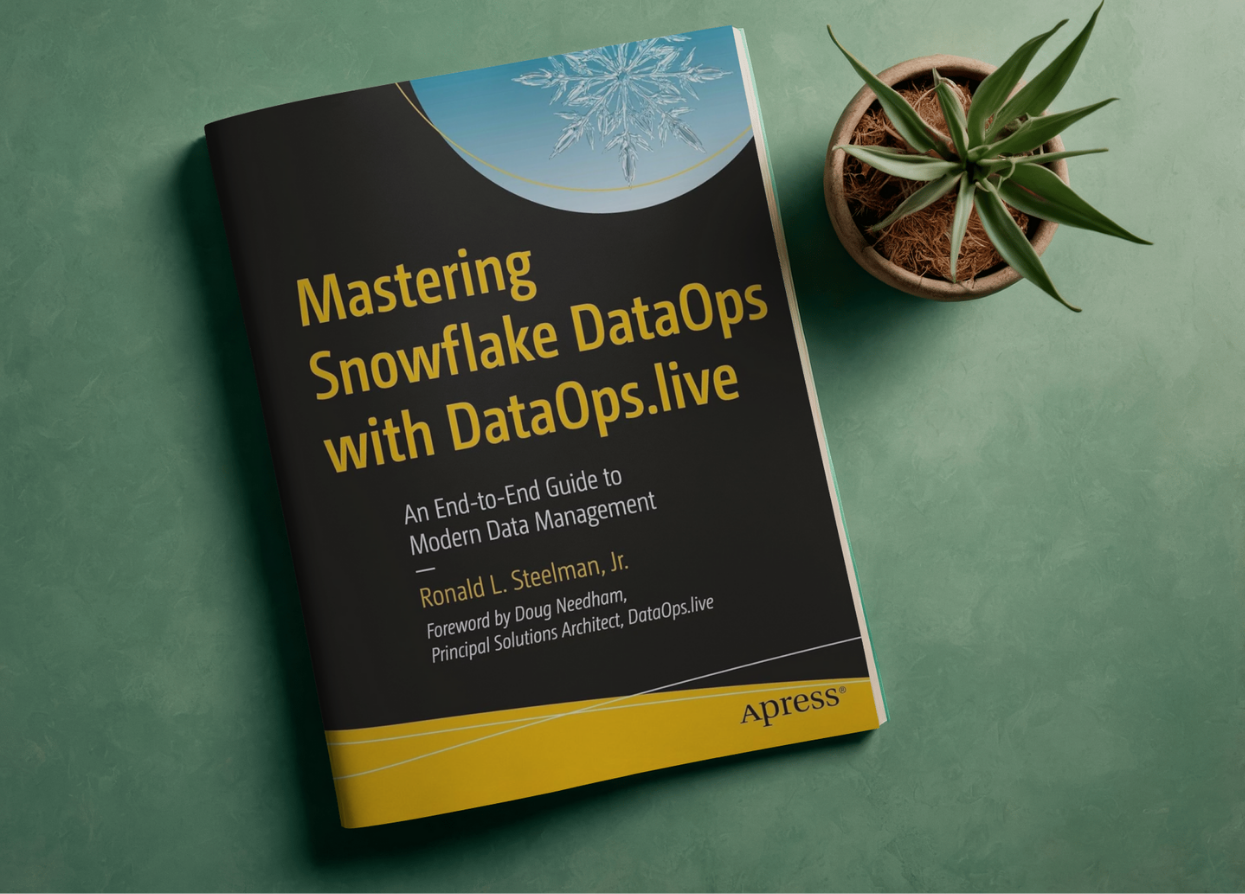
I never set out to write a second book about Snowflake. After the first one, I thought I had scratched that itch. But somewhere between managing branch-based development in massive data environments, building production pipelines with DataOps.Live and listening to teams struggle with the same problems I once tripped over, it became clear: someone needed to connect the modern data world with the operational rigor that software engineering has long had.
When I started my career as a software engineer, CI/CD wasn’t some abstract methodology; it was survival. It was the reason releases didn’t turn into all-night code freezes, and why developers could experiment without blowing up production. When I shifted into data, that discipline didn’t immediately follow me. Engineers and technical teams were still viewing data like a wild ecosystem that resisted automation, where change management meant “pray and deploy” and testing was an afterthought. Meanwhile, Snowflake arrived as a flexible, powerful, and genuinely different platform, opening the door to possibilities that demanded a better way to control the chaos.
That’s where DataOps.Live entered my world. By 2020, I was using it in real-world environments; not proofs-of-concept, not toy projects, but messy, high-stakes architectures. It was the first time I saw DataOps principles applied in a way that felt as natural and essential as CI/CD did back when I was writing application code. The workflow made sense. The discipline felt familiar. The platform enabled what the philosophy demanded. And somewhere between refactoring pipelines, reviewing branch-based merges, and watching teams breathe easier after deployments, I realized there was a book in all of this.
Writing it wasn’t about ego or money, though I’d be lying if I said the finished manuscript didn’t hit me with a wave of pride that I didn’t expect. It was about putting tribal knowledge into a form that wouldn’t get lost in Slack threads or conference calls. It was about bridging gaps between beginners and leaders, between those just stepping into Snowflake and those who need to justify an architectural investment. It was about showing data practitioners why CI/CD isn’t a luxury; it’s oxygen. And yes, it was about helping others avoid the painful lessons I had already learned.
I didn’t want to write the definitive encyclopedia of DataOps or DataOps.Live…nobody wants a second job disguised as a book. I wanted something you could read without feeling overwhelmed, but still feel like you walked away with the blueprint. Tight, readable, and grounded in reality, even if that meant cutting chapters I spent weeks on. It turns out restraint is as important in writing as it is in architecture.
Why CI/CD Isn’t Optional Anymore, Even Though Data Teams Still Act Like It Is
If you ask a room full of software developers whether CI/CD is necessary, they’ll look at you like you just wondered whether gravity is optional. Ask the same question in a room full of data engineers, analysts, or platform owners, and you’re still going to get hesitation. Tradition is part of it, as data work has long been tied to manual processes and rituals passed down like folklore. But the environment has changed.
Today, data products evolve as fast as applications. Dashboards are front doors into decision-making. ELT pipelines change weekly, and sometimes daily. And when the surface area of your data estate grows, the consequences of informal change grow with it. Break a table, and you might break an executive dashboard. Break a dashboard, and you might break a quarterly outcome.
Snowflake, almost paradoxically, made this worse and better at the same time. Its architecture makes iteration easier, sometimes infinitely easier, but iteration without discipline leads to drift, inconsistency, and the sinking feeling that nobody knows whether the model being queried today matches the one that existed last week.
That’s why CI/CD matters. It’s the difference between development being an adventure and development being a controlled experiment. But explaining that to someone who has never used branch-based development in a data environment is like describing color to someone who’s only lived in grayscale. They won’t feel the need until they experience the consequences.
And then comes the first revelation: zero-copy cloning gives you every reason to apply CI/CD in Snowflake. Every branch gets its own sandbox, backed with real data, isolated enough to experiment yet safe enough not to wreck production. When that clicked for me, I had discovered the thing that made software-style development finally work in data environments.
I’ve seen teams go from hesitant to believers in a single sprint, not because of theory, but because they watched a branch come to life, tested changes, ran automated transformations across bronze, silver, and gold layers, deployed confidently, and walked away with the incredible feeling of meaningful progress without collateral damage.
DataOps isn’t a trend; it’s overdue inevitability. Snowflake just made it obvious.
What I Hope People Take Away, And What I Want to See Happen Next
If readers walk away with one insight from this book, I hope it’s this: DataOps isn’t about Snowflake, it’s about the mindset you bring to data. Snowflake just happens to be the environment where the philosophy shines brightest. I’ve used these principles across SQL Server, Oracle, and Postgres. Anywhere data exists, reliable pipelines and disciplined deployments are needed as well.
But Snowflake still feels special to me. The combination of elasticity, separation of storage and compute, and zero-copy cloning feels like an ecosystem designed to be fully unlocked by DataOps. It’s why, if I’m honest, I want to see Snowflake buy DataOps.Live outright and make DataOps a first-class feature. It shouldn’t be something users might consider someday; it should be part of the contract, a default expectation like security or backups. A platform this capable deserves operational guardrails baked in.
The book is my attempt to push that future forward, even if just a step. It’s for the beginner who wants to understand the why, for the expert who wants confidence they’re not alone in their frustrations, for the technical leader who needs language to justify investment, and for the practitioner who has always suspected that “just refresh the model and hope” isn’t a strategy.
I’ve seen first-hand what a DataOps workflow enables: collaborative development without collisions, pipelines that survive change, data layers that support each other rather than interfere, and the rare feeling of going to bed before a release with real sleep, not anxious sleep.
So far, the responses are overwhelmingly telling me others feel the same. DataOps.Live has endorsed the book, they’re sharing it with customers, and early readers have told me it puts words to problems they couldn’t articulate. That’s the reward, knowing something I once carried in my head is now in the hands of others who can build with it.
And yes, when the box of author copies arrived, I took a moment to feel proud, not because it was finished, but because it finally said what I had been trying to say for years: data deserves discipline, and discipline enables freedom.
If you’ve ever felt the gap between what Snowflake can do and what your processes let it do, this book is my attempt to close that distance. It’s practical, it’s honest, and it reflects the way teams actually work, not the way slide decks pretend they do. If you want a more straightforward path to bringing discipline, collaboration, and CI/CD into your data world, give it a read and see if it moves you forward.
Mastering Snowflake DataOps: A Practical Guide to DataOps.Live — available here: https://link.springer.com/book/10.1007/979-8-8688-1754-0
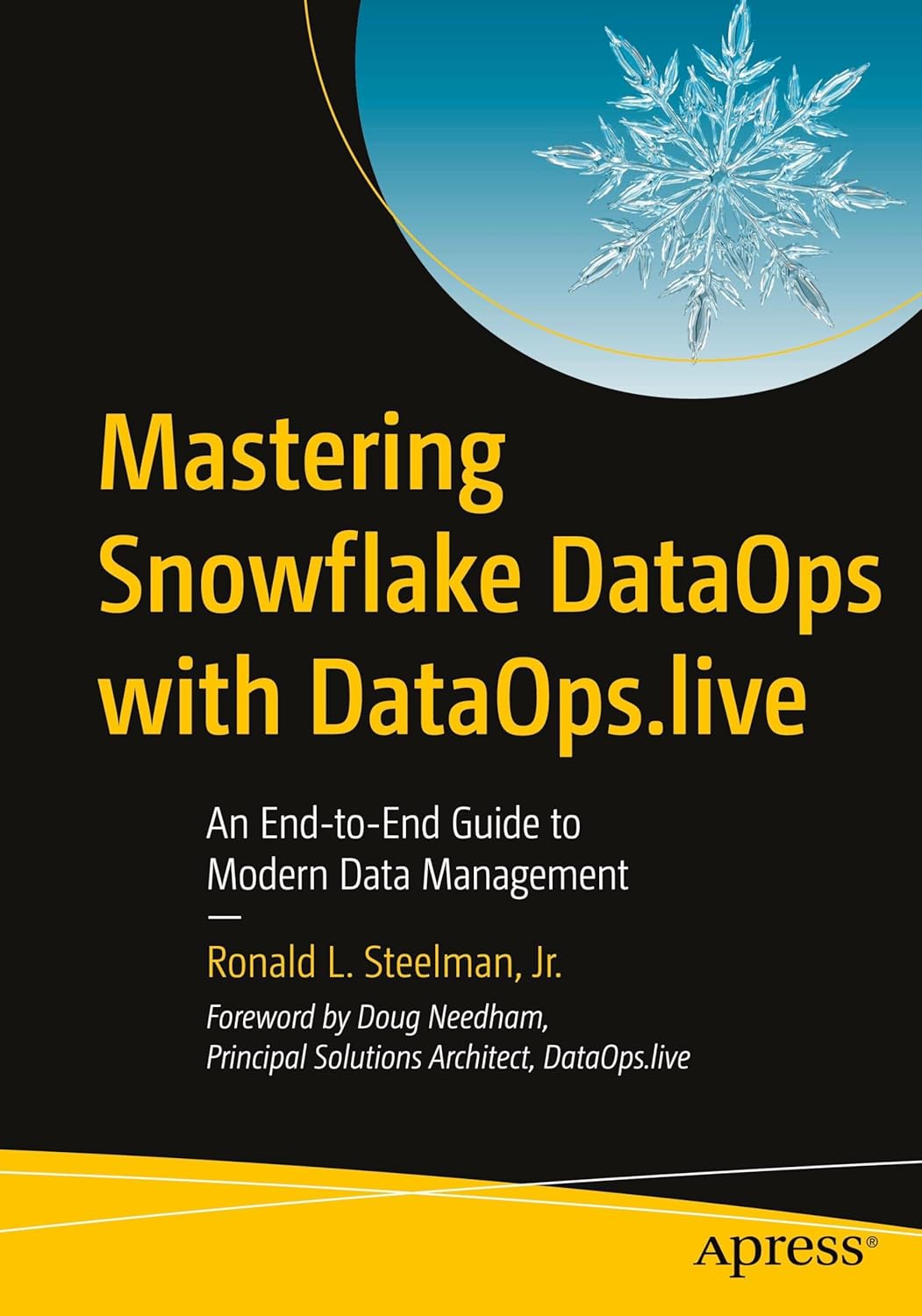 My latest book is out! Dive in and get inspired — practical insights on Snowflake, DataOps, and modern data architecture.
Leave a Reply